

Three practical use cases for AI and automation in health care
Health care organizations are facing a new reality, one that is more digitally driven, efficient, patient-centric and responsible. Factors driving this new reality, and the organizational transformation needed to support it, include the cost and availability of labor, physician burnout, declining margins, changing reimbursement models and the growing demand for value-based care.
And while it’s clear that key technology solutions like artificial intelligence and automation can address many of these challenges, some health care organizations struggle with how to even begin this transformational journey.
Where to start?
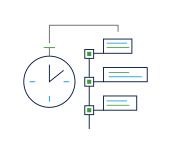
The following outline describes a strategic pathway for your health care organization to harness the potential of AI and automation, providing the right infrastructure and support to ensure success and significant transformation.
If you need more help, check out our Where to start FAQ about generative AI and how to support your business goals.

Education
Early in the organization’s AI journey, leverage insights and advice to raise awareness and education internally among business or technical leaders. Begin working with a professional services consultant to help with awareness building, preparation and execution.

Awareness
Identify where and how AI can be used within the business and IT operations. Bring together stakeholders to identify high-value use cases. Formalize a strategy and develop a plan of how to evaluate AI opportunities and build them into the overall road map.
Preparation
After developing an AI strategy and identifying viable use cases, select an effective AI solution. Prep data and the governance environment for AI execution.

Execution
Implement tailored AI development or software, and deploy activities such as change management and process optimization.

Support
Following a successful AI implementation, manage ongoing maintenance and support moving forward.

Governance
The AI and automation journey also requires a strong governance strategy as well as responsible adoption, continuous assessment, documented policies and rigorous oversight.
Health Care AI and automation use cases
AI and automation solutions can be a game changer by addressing some of the most nagging and critical challenges in your health care organization. In many cases, these solutions can leverage existing systems, such as Microsoft Azure, avoiding the need for costly new technological investments. In addition, for some applications, funding for certain AI and automation assessments is available to get you started.
A trusted advisor can help you evaluate the potential benefits, impact and feasibility of implementing improved data, analytics, AI and automation within specific areas of your organization, as well as build the architecture and strategy to implement solutions tailored to your challenges.

Physician messaging
Managing physician inboxes is a significant challenge due to the overwhelming volume of electronic communications from patients and others. Physicians must navigate numerous messages, emails and consultation requests while balancing administrative tasks and patient care.
Challenge: Patient communications and needs will continue to increase, but health care organizations will be challenged to fill physician, nursing and supportive staff roles to address them. The right technology can help bridge the gap.
Utilizing machine learning, natural language processing and other types of AI technology for patient messaging can help streamline operations by providing:
- Assessment of the organization’s current and future messaging needs
- Analysis of the business value of an AI solution for real-time read and write connectors, and implementation of a selected solution
- Evaluation of performance and message triage using sample messages
- Development and assessment of strategic release gates for all releases to production
- Ongoing monitoring, assessment and optimization
Communication channels with patients can be continually prioritized, delegated and streamlined. Benefits include:
- Improved speed, consistency and accuracy in responding to patient messages
- Opportunities to develop strategic initiatives for enhancing primary care, patient access and population health
- Less time and effort physicians and care teams must devote to managing patient messages, due to triaging of messages to the appropriate level of service
- Improved job satisfaction for physicians and care teams
- Improved labor cost management due to optimal workflows
Patient messaging automation: Proof of concept
It is like having an assistant who sifts through messages, grasps their meaning, summarizes them, directs them to the appropriate places within the organization, and can even craft a draft response.
Patient movement and throughput
Streamlining processes ranging from emergency department admissions to discharge orders and preparations can ease a patient’s journey through the entire health care system, improving care quality and accuracy, addressing costs, and enhancing patient satisfaction.
Challenge: Patient throughput efficiency remains an ongoing issue for today’s providers. Length of stay is the single largest factor affecting cost and margin.
AI and automation provide a proactive approach, resulting in:
- A reduced length of stay and cost
- An enhanced patient experience
- Improved resource allocation
- Improved communications and continuity of care
Increasing margin and improving patient care
Leveraging advanced and analytics in surgical and procedural areas.

Revenue cycle
As the world continues to witness the rapid evolution and adoption of AI and automation, it has become increasingly apparent that organizations not at the forefront of this technological revolution will be left behind. Health care providers are witnessing this in all aspects of their operations—but most vitally, in their margins and revenue cycle management.
Challenge: Claim denials are on the rise as payers deploy AI around claim reviews, prior authorization requirements and more. The results have been devastating to hospitals and health systems already operating on tight margins and lacking the AI tools to address and manage payer demands.
Enhancing existing platforms and electronic health record systems with AI tools can optimize the revenue cycle, resulting in:
- A more level playing field with payers, counteracting algorithms, streamlining complex processes and optimizing financial performance
- More prior authorizations, cost estimates, claim status updates, appeals and other revenue cycle functions
The question isn't whether to adopt AI, but how quickly and securely an organization can do it. The technology is a vital tool that can combat evolving payer algorithms, allowing organizations to stay ahead of claim denials and reviews. Other benefits include:
- Faster, more accurate authorizations and claims processing
- Reduced manual processes
- Optimized financial performance
- Maximized IT investments through the application of AI and automation with existing technology
Revenue cycle automation quick start: Microsoft Azure marketplace
Level the playing field by automating and optimizing your revenue cycle operations.
Become a more resilient organization with AI and automation technology strategies.
- /insights/industries/health-care/health-care-professionals-discuss-the-power-of-generative-ai
- /insights/industries/health-care/strong-generative-ai-governance-is-key-to-accelerating-patient-centered-care
- /insights/services/digital-transformation/the-middle-market-ai-playbook