
How quality engineering can benefit consumer and industrial products companies
Consumer and industrial products companies have long understood the importance of quality in product development. With the rise of digital business and the increasing integration of technology into products and services, prioritizing quality in technology implementation and system integration has become even more critical.
To support speed-to-market initiatives and maximize competitive advantage, companies are rapidly adopting modern software development practices, with an increased focus on ready-to-use software as service technology solutions.
However, these implementations lead to large system integrations of digital products residing on multi-cloud IT infrastructure. Organizations must ensure that their digital products offer reliability and scalability, as well as seamless integration across multiple cloud environments to provide users with a consistent experience.
Introducing quality engineering
Quality engineering can help your company ensure that technology solutions meet these high standards and integrate seamlessly with existing systems and processes. By adopting a proactive approach to quality throughout the development life cycle, your company can reap the benefits of increased efficiency, cost savings, enhanced reputation, and greater customer satisfaction.
For companies looking to leverage technology to grow their business and stay competitive in today's digital landscape, quality engineering is essential. It is a systematic and proactive approach that ensures the desired quality is built into a product or service from the outset, rather than being addressed after the fact. For manufacturing companies, quality engineering should be a standard approach when implementing any technology, especially packaged enterprise resource planning systems.
Quality engineering and traditional software testing are related, but distinct. As a holistic approach, quality engineering focuses on identifying and addressing quality risks through both waterfall (requirements analysis, design, build, testing, implementation, and deployment) and agile (planning, sprint) activities.
Representing an evolution in software testing, quality engineering encompasses the traditional activities of verifying that software meets specific requirements through manual or automated tests. But while traditional testing is a reactive approach that focuses on finding defects after they have been introduced, quality engineering is a proactive process that aims to prevent defects from being introduced in the first place.
More effective testing benefits
More than just a testing process, quality engineering plays a critical role in the implementation of a packaged ERP system, helping to ensure that the system meets the unique requirements of your manufacturing organization and integrates seamlessly with existing systems and processes.
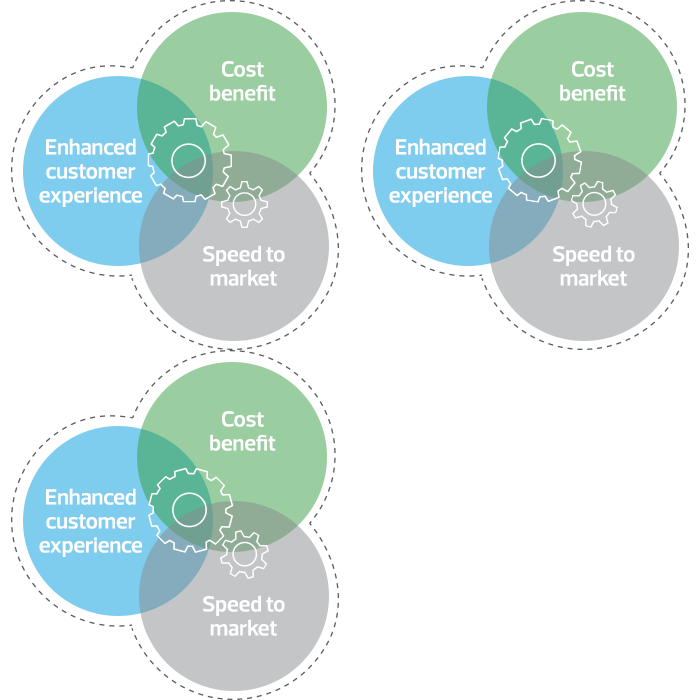
This holistic approach provides several benefits over traditional software testing, including:

Benefit 1
Enhancing customer satisfaction

Benefit 2
Improved product reliability

Benefit 3
Increased efficiency

Benefit 4
Compliance Issues

Benefit 5
Enhanced reputation

Benefit 6
Cost savings

Benefit 7
Early identification of quality risks
Benefit 8
Improved overall quality

Benefit 9
Better alignment with business requirements
Benefit 10
Reduced rework
Each of these benefits results in lower implementation costs and better alignment with business requirements.
In contrast, the risks of using only a traditional software testing approach can be significant. For example, late identification of quality issues can cause problems that are expensive to fix and delay deployment.
And though traditional testing can determine whether the software meets technical requirements, it does not ensure optimal quality—i.e., software that is user-friendly, efficient, reliable, and scalable; designed to perform well in various conditions and to provide a good user experience; and easy to maintain, reducing the cost of ownership over time.
Quality engineering drives value through three main functions:
Conducting comprehensive testing
Comprehensive testing identifies and addresses quality risks well before they become issues and expensive to fix.

Focus on the overall quality
Ensuring that the software is of high quality (more than just meeting its technical requirements) results in systems and tools that users adopt readily, increasing productivity and speed to value.

Aligning with business requirements
Software should meet the specific requirements of the manufacturing organization. More than that, the software should support the company's strategy and integrate seamlessly with its existing systems and processes.
Positioning your company for success
Your company may benefit from using an external provider, such as a consulting firm, to deliver quality engineering services, or you can use an existing ERP implementation services provider. Whichever provider you select should offer a dedicated quality engineering team that can bring independence and experience, knowledge resources, flexibility and scalability, improved risk management, and access to proven and reputable practices.
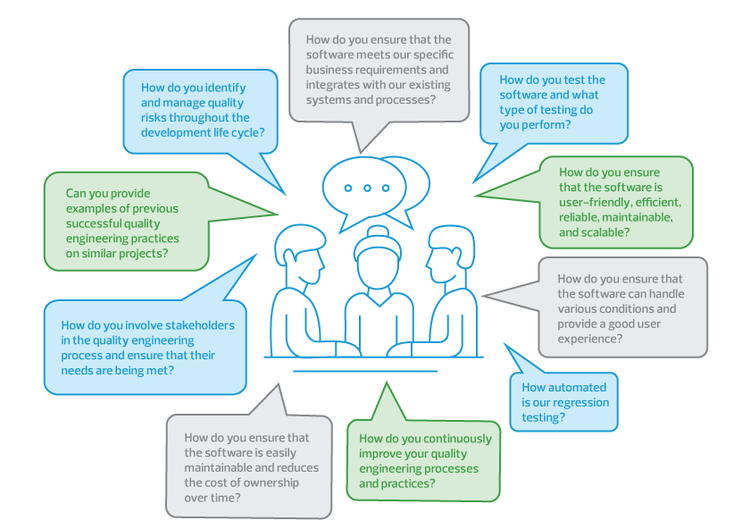
In today's digital age, where technology plays an increasingly critical role in consumer and industrial products, quality engineering is essential for ensuring that the systems supporting these products meet the highest standards of quality. Companies that fail to prioritize quality in their system integration risk losing customers, damaging their reputation, and missing out on opportunities for growth.
If your current implementation team is unable to answer the key quality engineering questions outlined above, it may be time to consider adopting a more proactive and holistic approach to quality. Doing so can help ensure that your technology solutions are reliable, scalable, and user-friendly, enabling you to deliver the best possible experience for your customers and stay ahead of the competition. Ultimately, the success of your business may depend on it.