

ViDA reform addresses digital trade and cross-border compliance
Key takeaways



Value-added tax (VAT) makes up a significant portion of tax revenue for European Union (EU) member states; however, according to the European Commission’s 2022 Value-Added Tax Gap report, it’s also the basis of an estimated 89.3 billion euros in uncollected tax revenue due to noncompliance, fraud, evasion and miscalculations. The rise in digital transactions and e-commerce also contributes to this gap.
As such, the EU in April 2025 implemented its VAT in the Digital Age, or ViDA, package, a little more than two years after introducing and proposing it. It stands as a significant reform aimed at modernizing and adapting the VAT system to the digital economy, reducing fraud, and simplifying compliance for cross-border trade.
Various amendments will be rolled out progressively between now through 2035; however, significant advancements in this space have been well underway, with an even faster rate of change anticipated in the coming months.
ViDA pillars
ViDA covers three main areas, also known as pillars:
Pilar 1
Pilar 2
Pilar 3
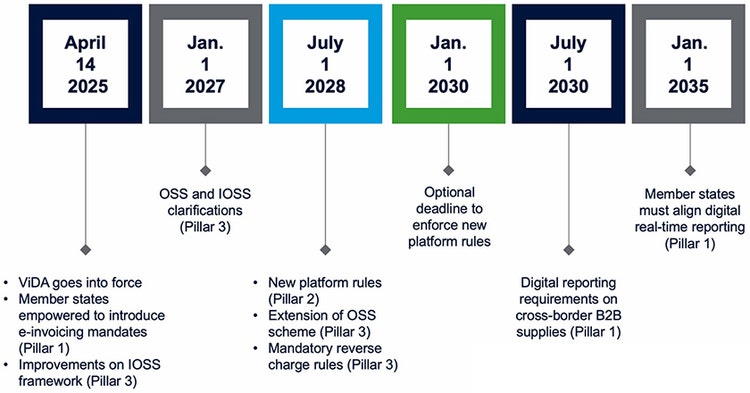
Timeline of key changes
Below is the planned timeline for the implementation of these amendments. Note the following are effective immediately:
- Individual member states may now introduce mandatory e-invoicing rules without needing prior approval from the European Commission.
- Additionally, they may also remove the domestic requirement that the use of electronic invoicing is subject to the recipient’s approval.
Businesses affected by ViDA and where to start
The effects of ViDA will permeate across all industries with the consistent link being businesses with activities in the EU. This includes businesses:
- Engaged in cross-border transactions within the EU
- Operating across multiple EU member states
- Operating digital marketplace platforms, particularly for short-term accommodations rentals and passenger transportation
- Conducting e-commerce and selling directly to consumers in the EU
To prepare, businesses should assess their current systems, data governance and processes against the expectations and requirements of ViDA. Businesses can then identify gaps within their processes and determine how they can be addressed, be it through automation, technological upgrades, systems consolidations or even an overhaul of how indirect taxes are currently being managed.
Gearing up for ViDA will require representation from teams beyond the tax function such as information technology, finance, operations and procurement. Particularly with the requirement for e-invoicing and near real-time reporting, accurate and reliable data will be crucial, requiring business departments to be cohesively aligned and operationally integrated.
Need help?
VAT advisors can support your business—from ViDA readiness assessments to implementations of technology or integration of processes required to support the ViDA requirements. Contact us to learn more.