
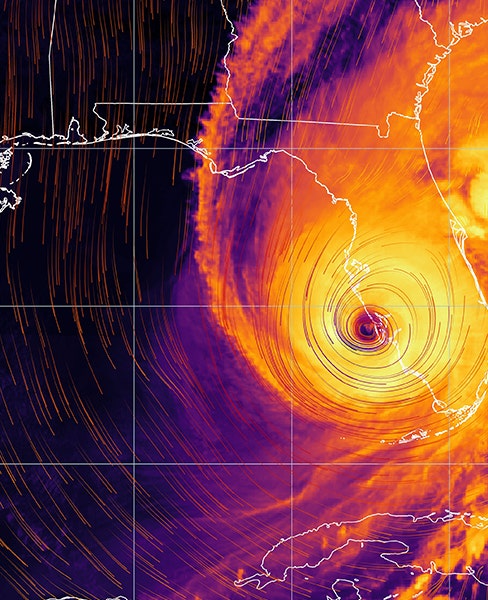
Executive summary: Hurricane Isaias tax relief postpones filing, payment deadlines for affected Florida counties
The IRS has postponed various federal tax filing and payment deadlines for Hurricane Isaias victims located in designated Florida counties. Affected taxpayers will have until Feb. 8, 2027, to file returns and pay any taxes that were originally due on or after Oct. 6, 2026. The relief also covers the Jan. 15, 2027, estimated tax payment and certain quarterly payroll and excise tax returns.
Affected taxpayers can use the additional time to identify postponed filing and payment obligations and evaluate other disaster-related provisions that may apply, including casualty-loss treatment and potential gain deferral. Taxpayers outside the disaster area may also qualify when records needed to meet a deadline are located in an affected area.
Filing and payment relief for affected taxpayers in designated Florida counties
The IRS has issued guidance granting tax relief to taxpayers affected by Hurricane Isaias in Florida that began on Oct. 6, 2026. Taxpayers now have until Feb. 8, 2027, to file various individual and business tax returns and make tax payments.
The IRS is offering the relief to those in areas designated by the Federal Emergency Management Agency, currently including taxpayers residing or having a business in Baker, Bay, Calhoun, Citrus, Columbia, Dixie, Escambia, Franklin, Gadsden, Gilchrist, Gulf, Hamilton, Holmes, Jackson, Jefferson, Lafayette, Leon, Levy, Liberty, Madison, Okaloosa, Santa Rosa, Suwannee, Taylor, Wakulla , Walton and Washington counties. Additional counties may be added at later dates, so it is recommended to check the IRS guidance for updated counties.
The relief postpones various tax filing and payment deadlines that were originally due on or after Oct. 6, 2026, and before Feb. 8, 2027. Affected individuals and businesses now have until Feb. 8, 2027, to file returns and pay any taxes that were originally due during this period.
The Feb. 8, 2027, deadline applies to individuals who had a valid extension to file their 2025 individual income tax return. However, because tax payments related to those 2025 returns were due on April 15, 2026, those payments are not eligible for this relief.
This relief also applies to the estimated tax payments normally due on Jan. 15, 2027. Penalties on payroll and excise tax deposits due on or after Oct. 6, 2026, and before Oct. 21, 2026, will be abated as long as the tax deposits are made by Oct. 21, 2026 (Note: The IRS guidance references both Oct. 21 and Oct. 26 deadlines; only Oct. 21 is correct, consistent with the FEMA declaration).
The Feb. 8, 2027, deadline also applies to affected quarterly payroll and certain excise tax returns normally due on Nov. 2, 2026, and Feb. 1, 2027.
Specific guidance and other actions eligible for Hurricane Isaias relief
Under the recently enacted Disaster Related Extension of Deadlines Act, Public Law 119-64, the postponement of a federal tax return deadline under section 7508A is treated as an extension for purposes of calculating the limit on a tax refund, giving affected taxpayers additional time to claim a refund or credit.
Under section 7508A, the IRS gives affected taxpayers until Feb. 8, 2027, to file most tax returns (including individual, corporate, and estate and trust income tax returns; partnership returns, S corporation returns, and trust returns; estate, gift, and generation-skipping transfer tax returns; annual information returns of tax-exempt organizations; and employment and certain excise tax returns) that have either an original or extended due date occurring on or after Oct. 6, 2026, and before Feb. 8, 2027.
The IRS relief includes other time-sensitive actions described in Reg. section 301.7508A-1(c)(1) and Rev. Proc. 2018-58. The IRS relief also applies to transferors who are not affected taxpayers but who are involved in a section 1031 like-kind exchange pursuant to section 17.02(2) of Rev. Proc. 2018-58.
Unless an act is specifically listed in Rev. Proc. 2018-58, the postponement of time to file and pay does not apply to information returns in the W-2, 1094, 1095, 1097, 1098 or 1099 series; to Forms 1042-S, 3921, 3922 or 8027; or to employment and excise tax deposits.
Disaster-related casualty losses
In addition to extensions of time to file tax returns and complete certain actions, federal disaster declarations offer taxpayers special options with respect to gain/loss recognition. Taxpayers who experience a casualty loss in a federally declared disaster area may qualify to recognize losses in the year prior to the year the casualty actually occurred under section 165(i). Taxpayers who realize gains by receiving insurance proceeds in excess of basis may be able to defer gain recognition by reinvesting in qualified property under section 1033. Some of these actions are time sensitive, so taxpayers are encouraged to contact their tax advisor to take advantage of the full range of relief options.
Taxpayers that will claim a disaster loss should note in bold letters at the top of their return the FEMA disaster declaration number. For the Oct. 6, 2026, Hurricane Isaias in Florida, the designation is 3655-EM.
Please see the applicable news release and refer to Publication 547 and Instructions to Form 4684 Casualties and Thefts for instructions.
Qualified disaster relief payments are generally excluded from gross income. This means that affected taxpayers can exclude from their gross income amounts received from a government agency for reasonable and necessary personal, family, living or funeral expenses, as well as for the repair or rehabilitation of their home, or for the repair or replacement of its contents. See Publication 525 for details.
Additional relief may be available to affected taxpayers who participate in a retirement plan or individual retirement arrangement (IRA). For example, a taxpayer may be eligible to take a special disaster distribution that would not be subject to the additional 10% early distribution tax and allows the taxpayer to spread the income over three years. Taxpayers may also be eligible to make a hardship withdrawal. Each plan or IRA has specific rules and guidance for their participants to follow.