

Headless with Microsoft D365 Commerce
Key takeaways



With the rising pressure to sustainably grow, retailers are seeking innovative ways to deliver superior customer experiences (CX). One such breakthrough innovation is "headless commerce," a separation of the front end and back end of a digital platform. This approach offers brands the freedom to build and iterate on their customer-facing experiences without impacting the business logic that resides in the back end. When combined with Microsoft D365 Commerce, this approach also gives retailers great flexibility and control over how businesses interact with their customers. Below is an overview of headless commerce, its benefits, and how it is implemented on Microsoft D365 Commerce.
The benefits of headless commerce
Headless commerce offers a wealth of benefits that can significantly enhance the way that retailers operate and interact with their customers, such as:
- Flexibility: With the front end decoupled from the back end, retailers are free to design and modify the customer-facing side of their platform without impacting the back end. This flexibility enables retailers to quickly adapt to market trends and customer preferences.
- Speed to market: Changes to the front end can be made quickly without having to overhaul the entire system, enabling faster rollouts of new features or updates.
- Personalization: Retailers can tailor the front end to deliver unique experiences to different segments, allowing for greater personalization of the customer experience.
- Omnichannel experience: Retailers can deliver a consistent experience across multiple channels, be it web, mobile or in-store. The back end remains the same while the front end can be customized for each channel.
- Scalability: As a business grows, the back end can handle the increasing load while the front end can be scaled independently to maintain performance.
Industry research shows significant upside to
implementing a headless architecture:
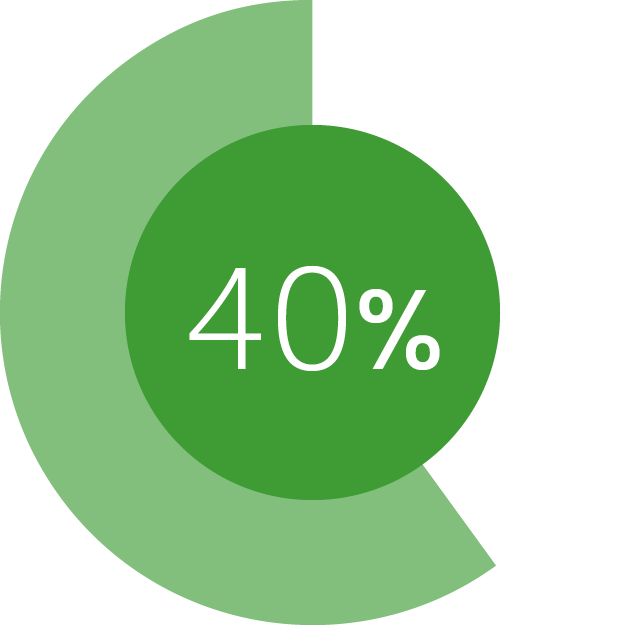
Businesses adopting headless commerce report a 40% reduction in their total cost of ownership.
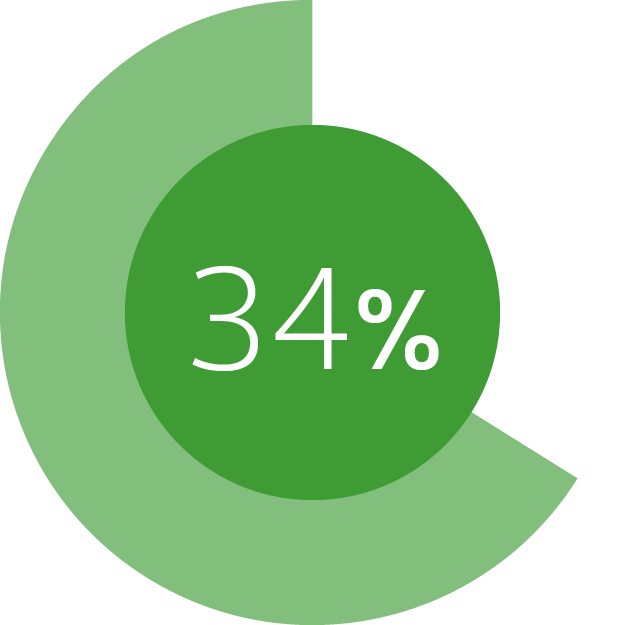
These businesses also experienced a 34% decrease in marketing reliance, making their marketing efforts more efficient.
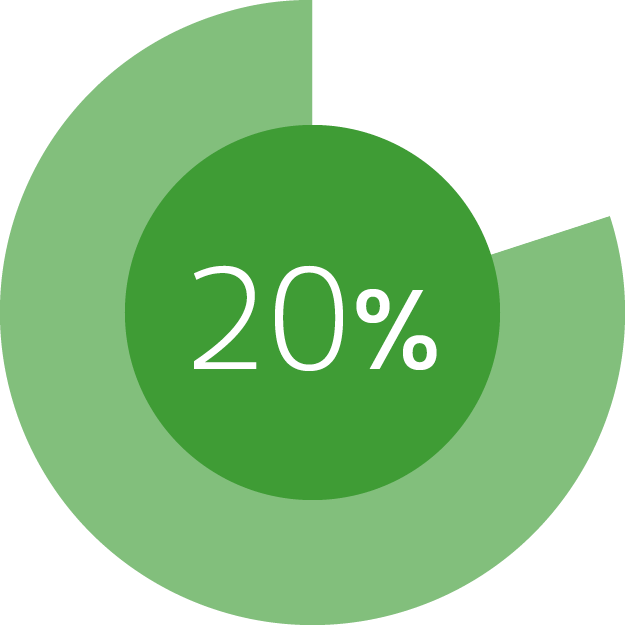
Businesses that have switched to headless commerce have seen a 20% increase in conversion rates.
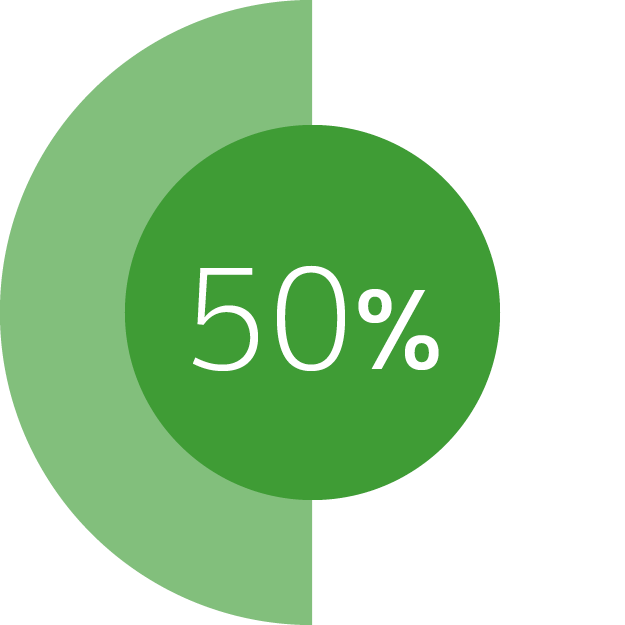
The time to market for new products and services has been reduced by 50%, allowing for quicker launches.
Microsoft D365 Commerce architecture
Microsoft D365 Commerce is a comprehensive solution designed to help businesses deliver personalized, seamless shopping experiences for customers across physical and digital channels. At the heart of this platform is the headless commerce architecture, also known as the Commerce Scale Unit (CSU).
CSU is an API-driven framework that enables extensible, personalized, friction-free commerce experiences and integrated, optimized back-office operations. It is consumed by various components of Microsoft D365 Commerce (back-office, in-store, call center and eCommerce) and provides a complete omnichannel solution. The APIs can also be consumed by third-party applications and Microsoft Power Platform connectors.
The CSU contains these main components:
- Consumer APIs: These are Open Data Protocol (OData) APIs exposed for Dynamics 365 Commerce and third-party applications to consume. The API layer is built using ASP.NET Core and provides different authentication options for clients to consume the APIs.
- Commerce Runtime (CRT): This is a collection of portable .NET libraries that contain the core commerce business logic. The Consumer APIs expose this business logic for clients to consume. To add or modify business logic, CRT is customized.
- Channel Database: This database holds transactional data and master data from one or more commerce channels, such as an online store or a brick-and-mortar store. Master data is pushed down from Commerce headquarters to the Channel Database using Commerce Data Exchange (CDX). Transactional data stored in the Channel Database is pulled back to Commerce headquarters using CDX.
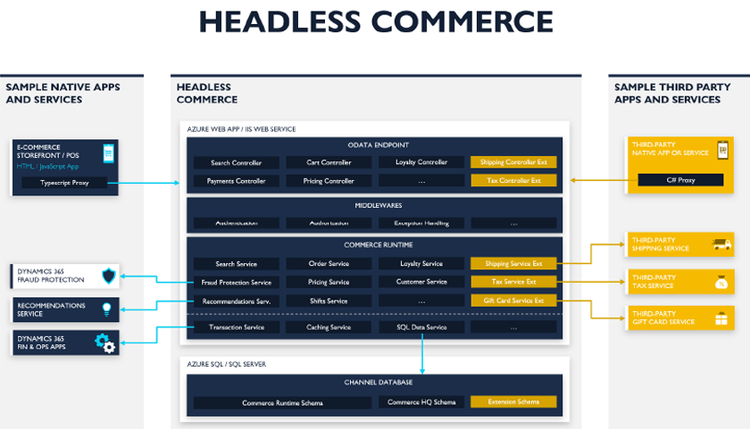
Headless commerce allows retailers to separate the front end and back end of a digital platform. That way, retailers can create unique and personalized customer-facing experiences without adversely impacting the business logic that reside in the back end.
Headless commerce with Microsoft D365
Headless commerce with Microsoft D365 Commerce leverages the power of the CSU, providing businesses with a robust, flexible and scalable solution.
The Consumer APIs—which form the front end of the headless commerce architecture—can be customized to create unique and personalized customer experiences. These APIs are built using ASP.NET Core, providing a variety of authentication options and making it easy for third-party applications and Microsoft Power Platform connectors to consume them.
The Commerce Runtime, which forms the back end, contains the core commerce business logic. This can be customized to add or modify business logic as per the needs of the business, ensuring that the back end can handle the specific requirements of the business without affecting the front end.
The Channel Database holds transactional data and master data from one or more commerce channels. This allows for a seamless omnichannel experience, with data from different channels being easily accessible and manageable.
In essence, Microsoft D365 Commerce's headless architecture provides businesses with the tools they need to create a flexible, scalable and personalized eCommerce platform.
What happens next?
Headless commerce represents a significant shift in the way retailers approach eCommerce, offering unprecedented flexibility and control over customer experiences. Microsoft D365 Commerce, with its robust headless architecture, provides retailers with the tools they need to leverage this approach effectively.
By decoupling the front end and back end of a digital platform, retailers can create unique, personalized customer experiences without affecting the core business logic. Whether you're a small business looking to grow or a larger organization seeking to enhance your eCommerce capabilities, headless commerce with Microsoft D365 Commerce offers a promising path forward.
Because of the sheer number of API calls and their complexity, RSM has developed tools and processes to make headless development on D365 Commerce faster and more streamlined for our customers. Connect with our team if you would like assistance with preparing a business case for your project.
Related insights
- /insights/technology/microsoft/composable-commerce-with-microsoft-dynamics-365-commerce
- /insights/technology/microsoft/3-unified-commerce-capabilities-that-require-store-team-support
- /insights/technology/microsoft/500m-retailer-uses-microsoft-dynamics-365-to-boost-unified-commerce